
‘Contradictions within the frame’
The Baroque and the Rococo were not merely artistic styles that reflected the complexity of their era, but strategies of aesthetic domination: technologies of visual control designed to normalise hierarchies through formal seduction. An art defined by drama, exuberance and, above all, by contradictions. Contrasts between light and shadow, the earthly and the divine, the rational and the emotional, but also between overflowing luxury and hidden misery, between ostentatious power and the fragility of its foundations. These dualities lie at the heart of my artistic practice.
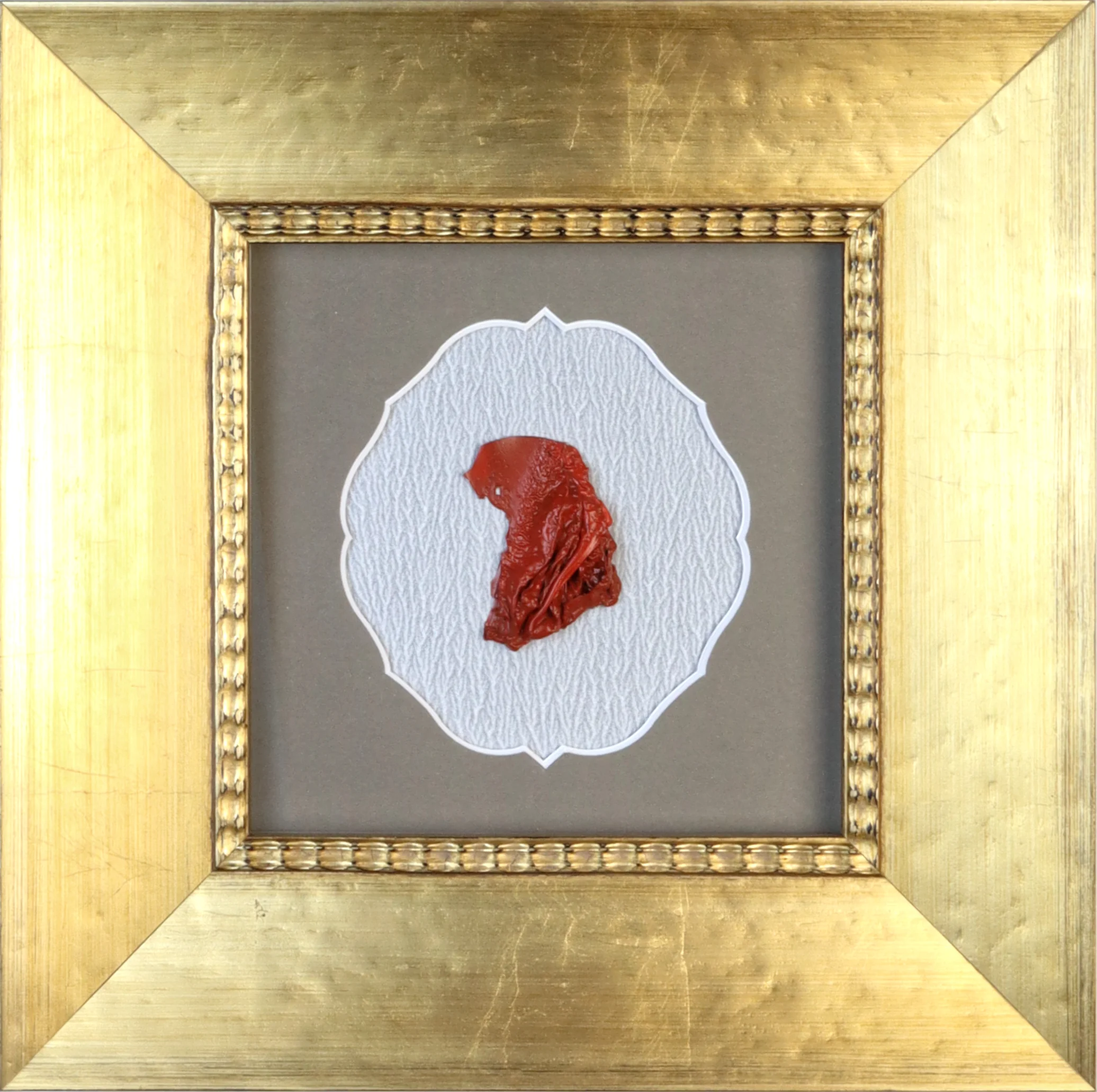
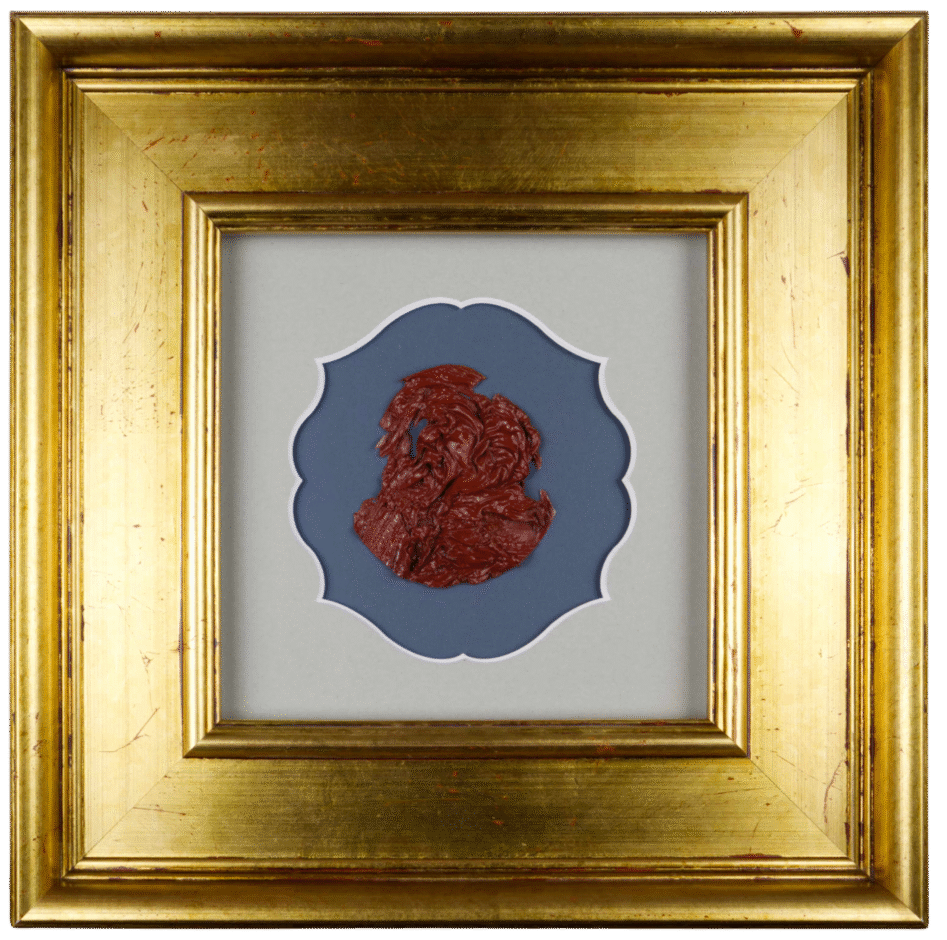
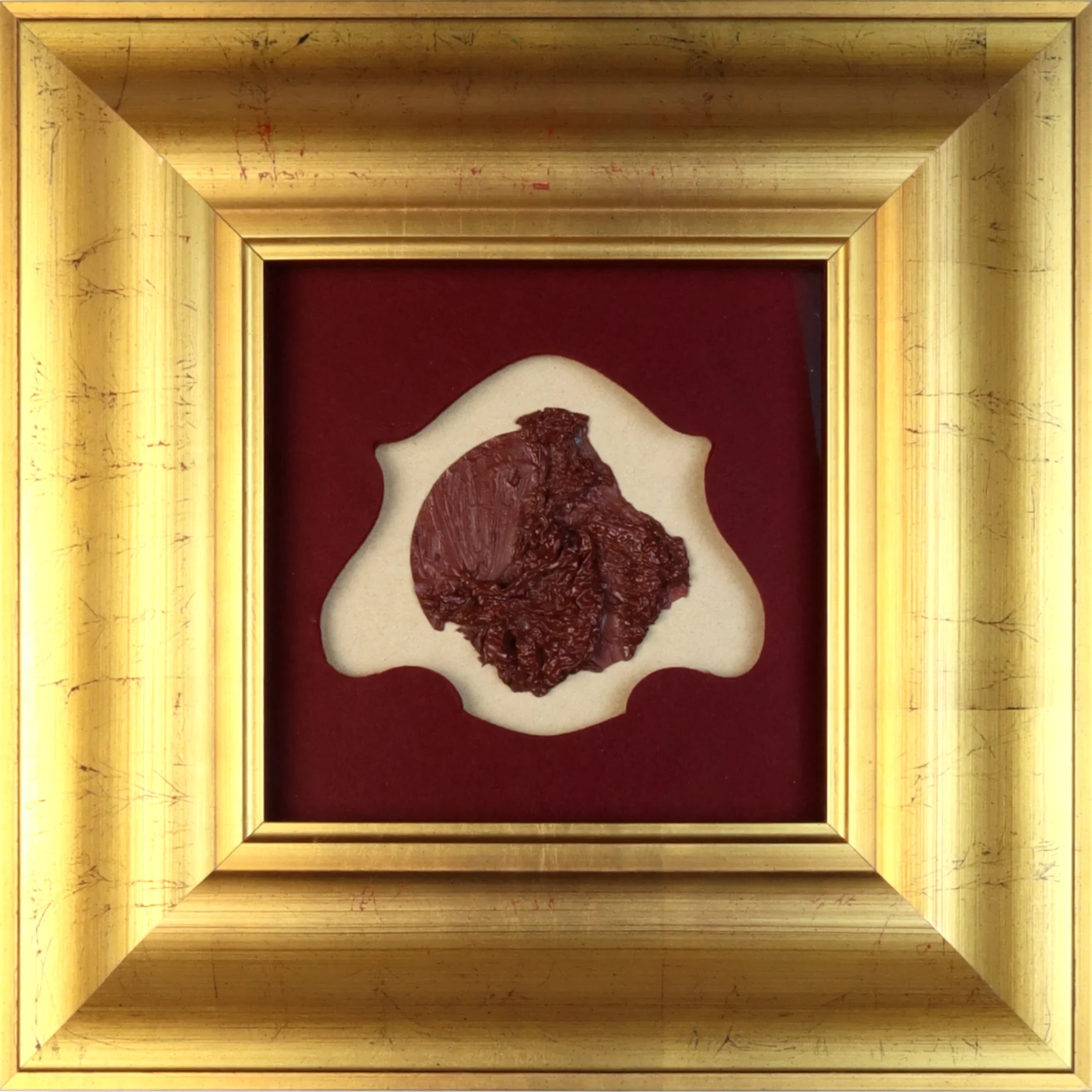
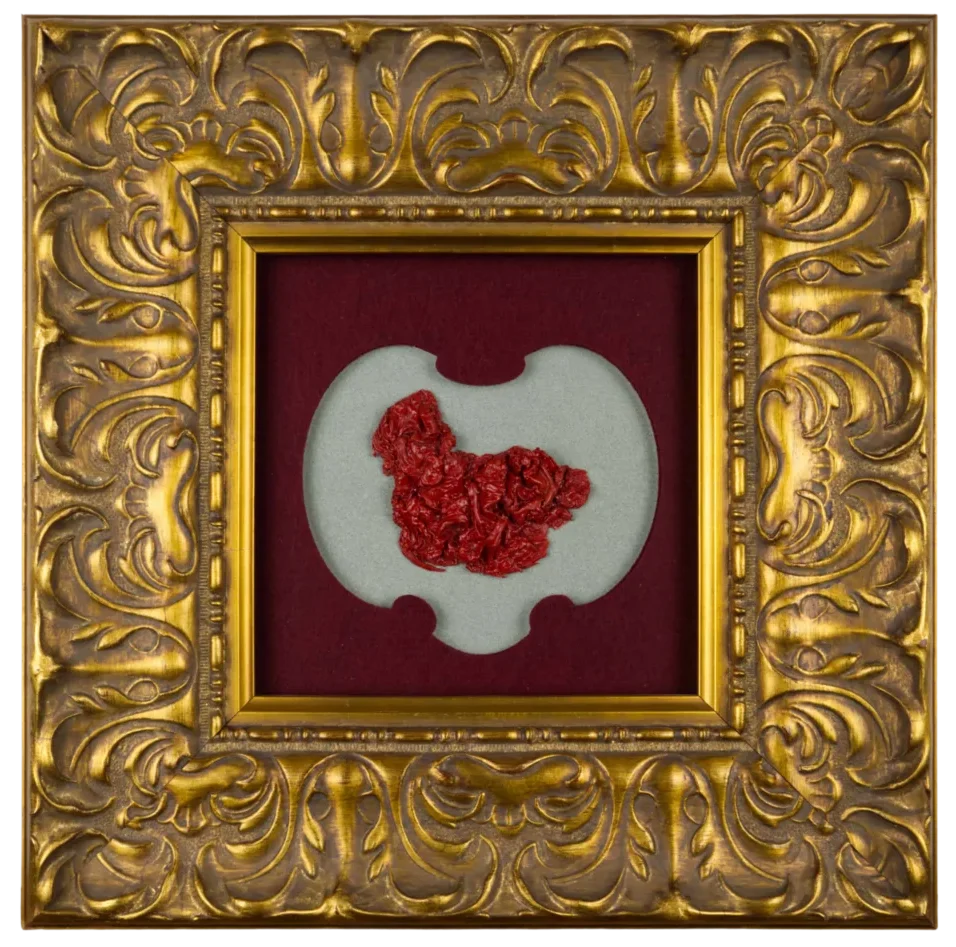
In this series, I reappropriate the visual language of the Baroque and Rococo to expose their paradoxes. The frames, which once enclosed the mural paintings of that era, have been reinterpreted in felt, a material associated with the domestic, the manual and the non-monumental. Within them, I enclose fragments of oil paint salvaged from my own painting practice: remnants of colour which, having been removed from their original context, lose their ‘noble’ function and become traces of an invisible process, vestiges of a labour that usually remains hidden behind a finished work. These residues rest on sandpaper, a surface whose abrasive texture evokes physical labour—a metaphor for exploitation—but also the friction between the polished and the raw, between the façade of luxury and the reality that underpins it.
Here, the decorative becomes an act of resistance. The frames, traditionally gilded to symbolise eternity and power, now enclose ephemeral, everyday materials: felt, leftover paint, industrial sandpaper. This juxtaposition is no accident, but a deliberate deconstruction. Gold, which historically concealed the cracks in the system, here reveals its fragility: a critique of invisible labour (sandpaper serving as a reminder that luxury depends on exploitation); the effort behind the ornament, the critique behind the form. It is not a matter of rejecting beauty, but of questioning what it conceals and how, by reappropriating it, it can become a gesture of dissent.