
Colombia: A History of Resistance and Conflict
For centuries, Colombia has been a country shaped by the tension between the wealth of its land and inequality. Since colonial times, the concentration of land ownership in the hands of a select few and the marginalisation of the majority have led to tensions which, over time, have developed into armed conflicts.
In the mid-20th century, partisan violence between Liberals and Conservatives claimed more than 200,000 lives in a single decade (1948–1958) – a period known as ‘La Violencia’. This conflict laid the foundations for the emergence of guerrilla groups in the 1960s, such as the FARC (Fuerzas Armadas Revolucionarias de Colombia) and the ELN (Ejército de Liberación Nacional), which sought a social revolution.
However, the state’s response and the emergence of paramilitary groups only served to further intensify the spiral of violence. Although the country has now taken significant steps towards peace – such as the
2016 peace agreement with the FARC – the wounds of the past remain open. Forced recruitment, displacement and violence persist in some regions, reminding us that peace is not merely the absence of war, but the presence of justice and equality.
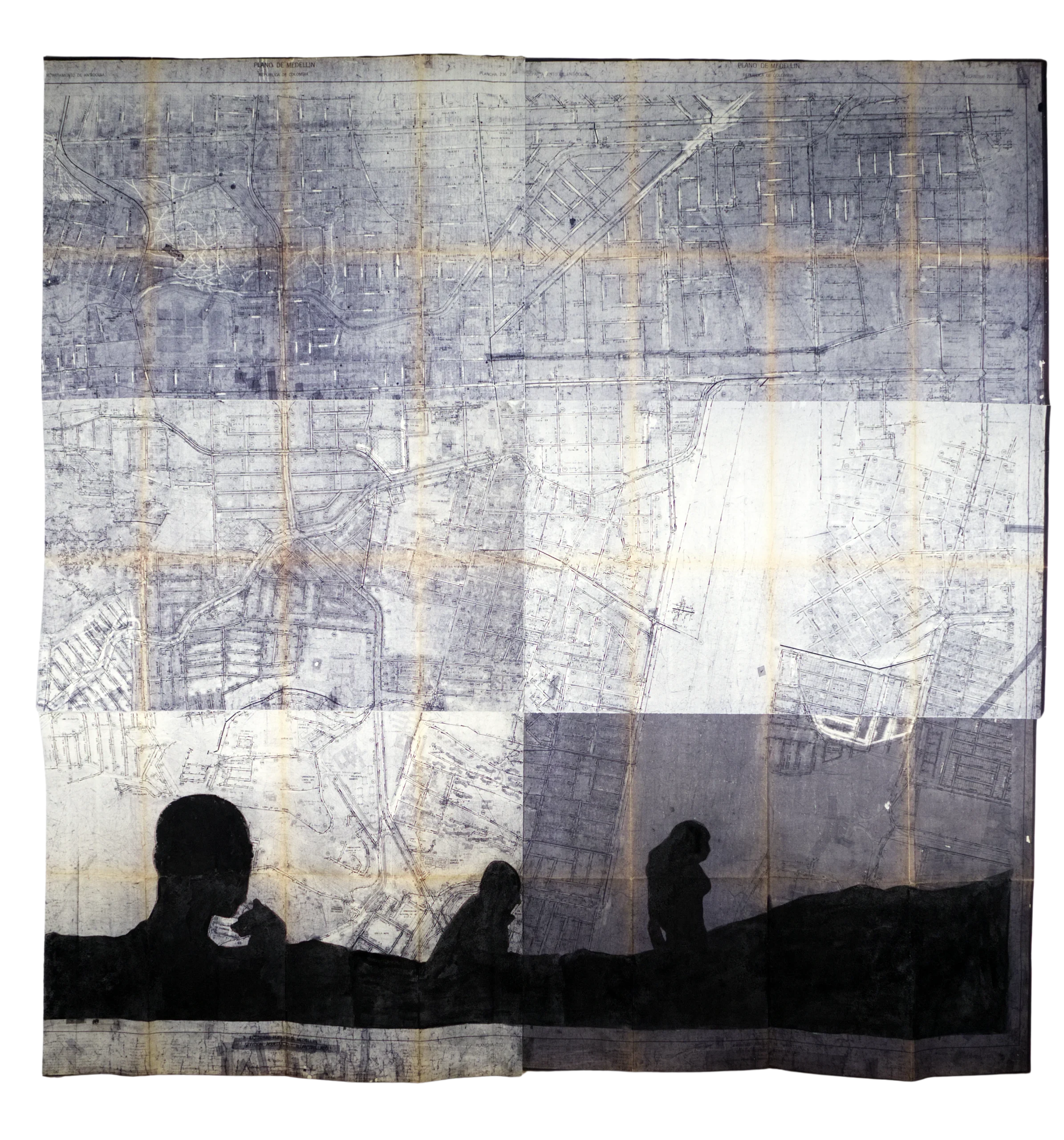
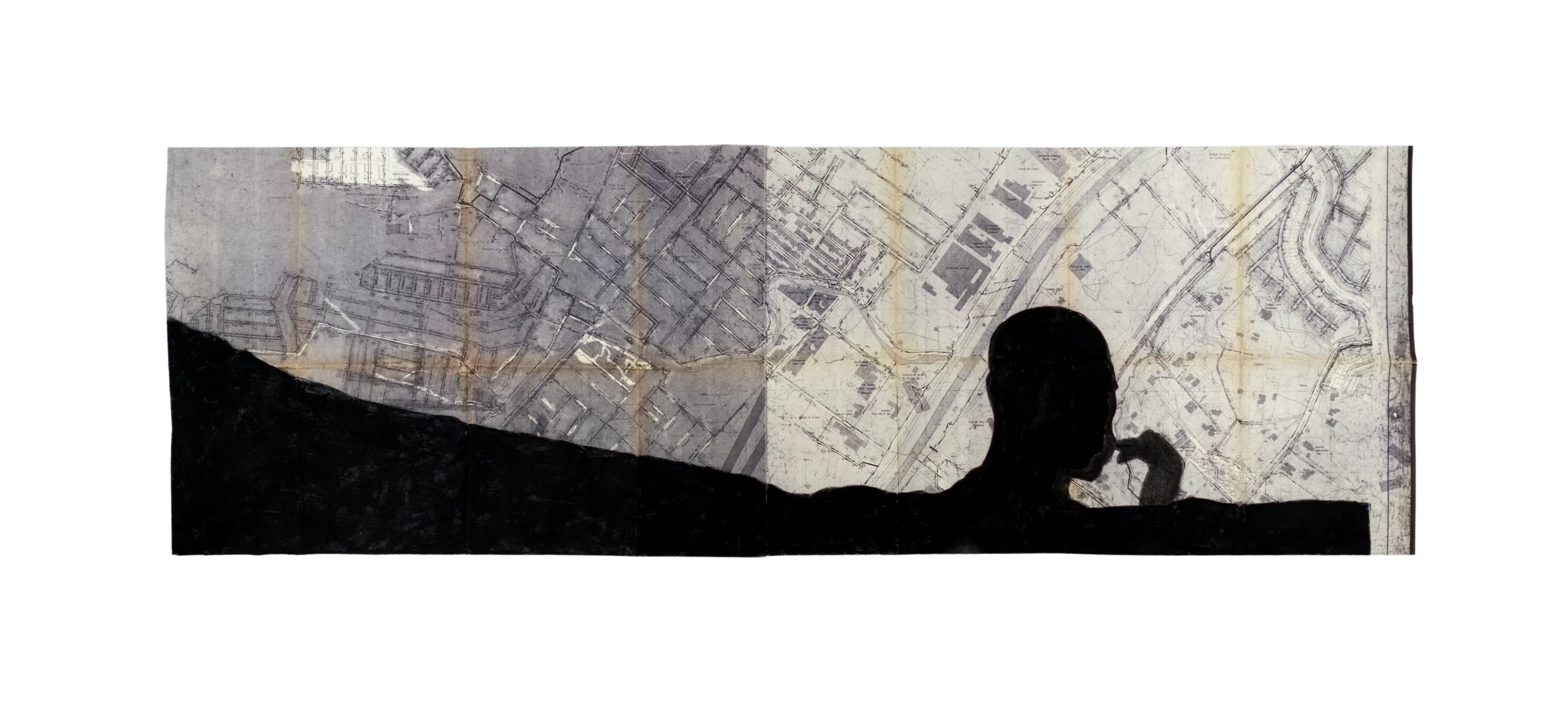
Tabula Rasa: Cartographies of Suffering (Medellín, 1971–1985)
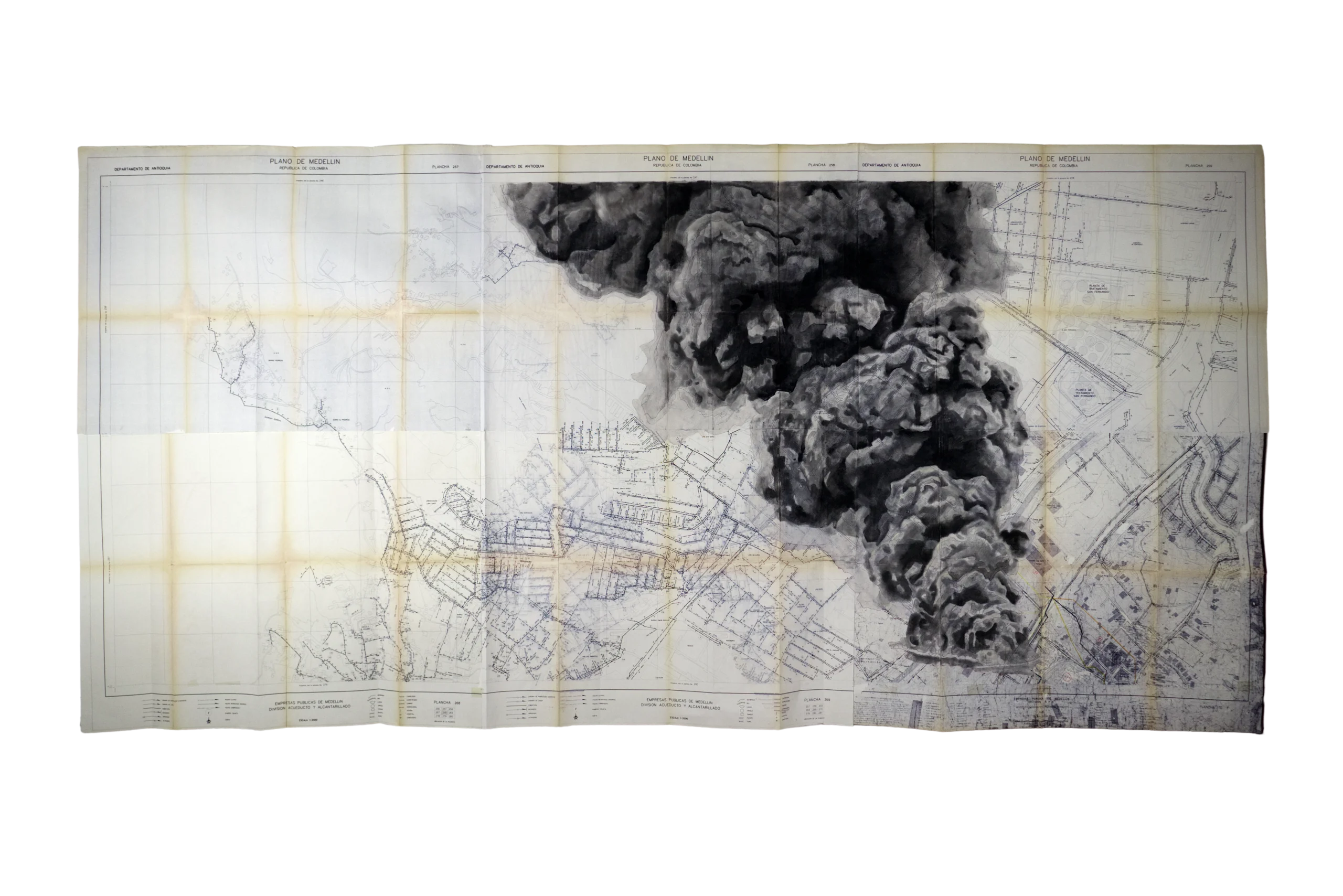
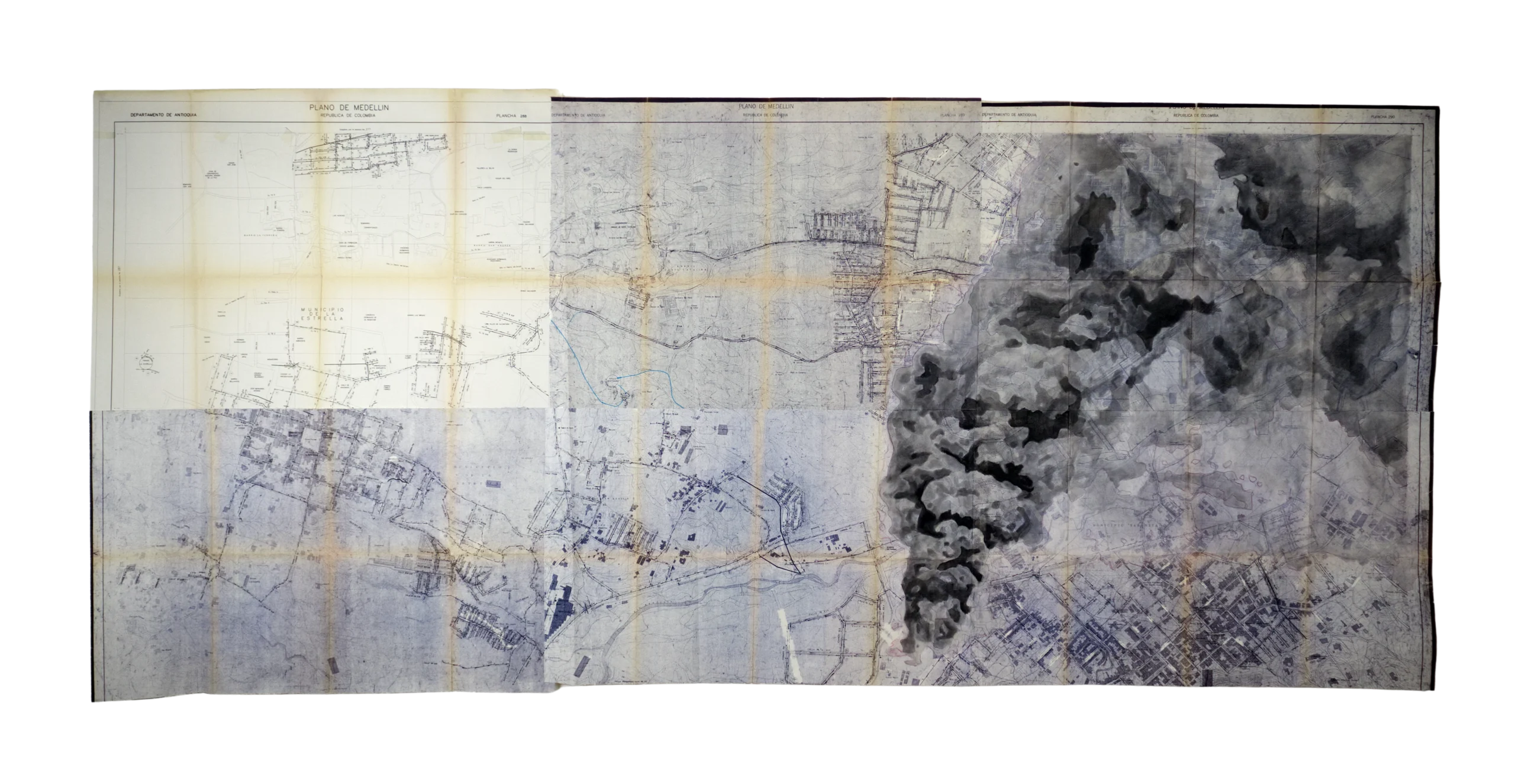
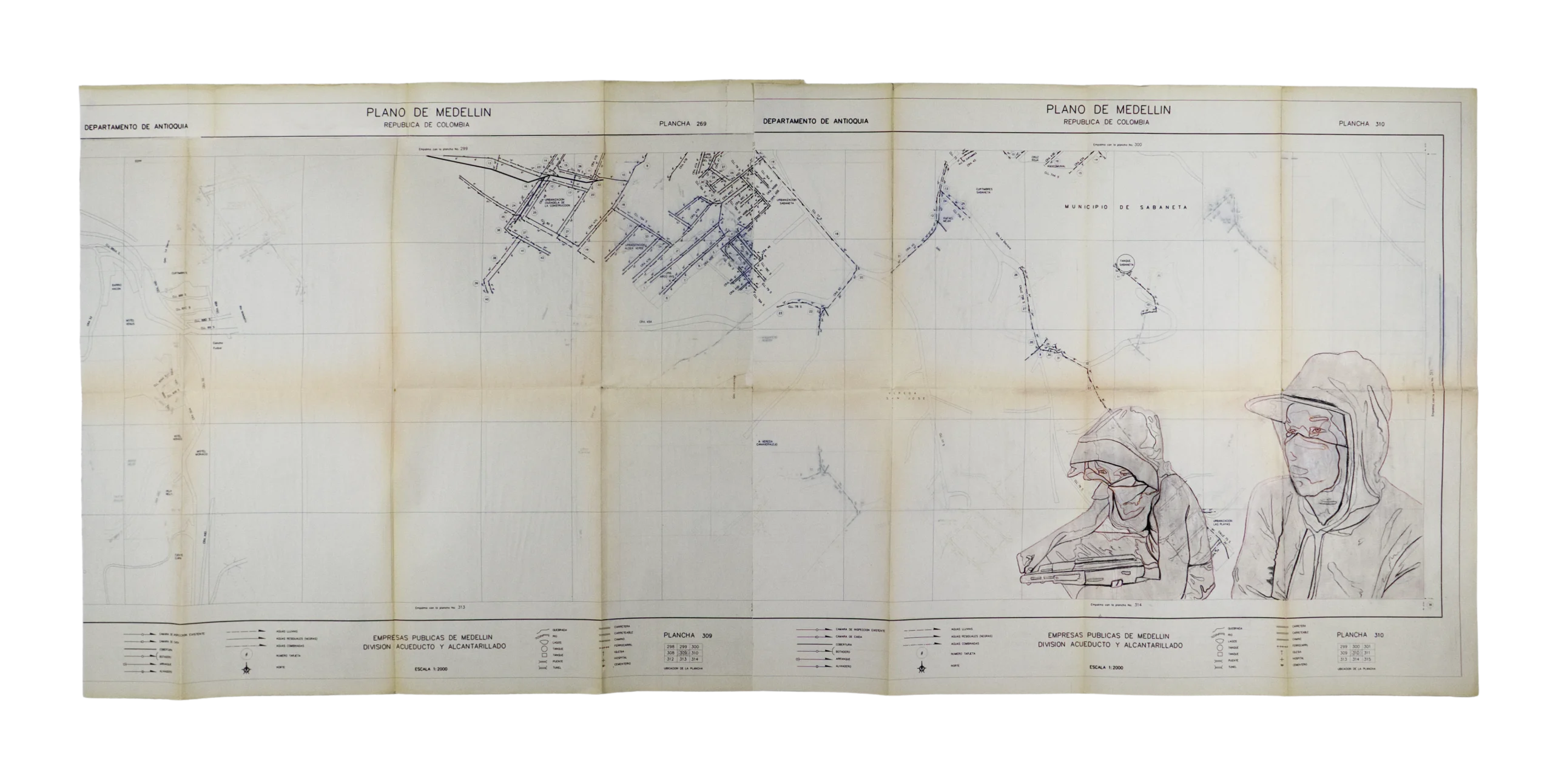
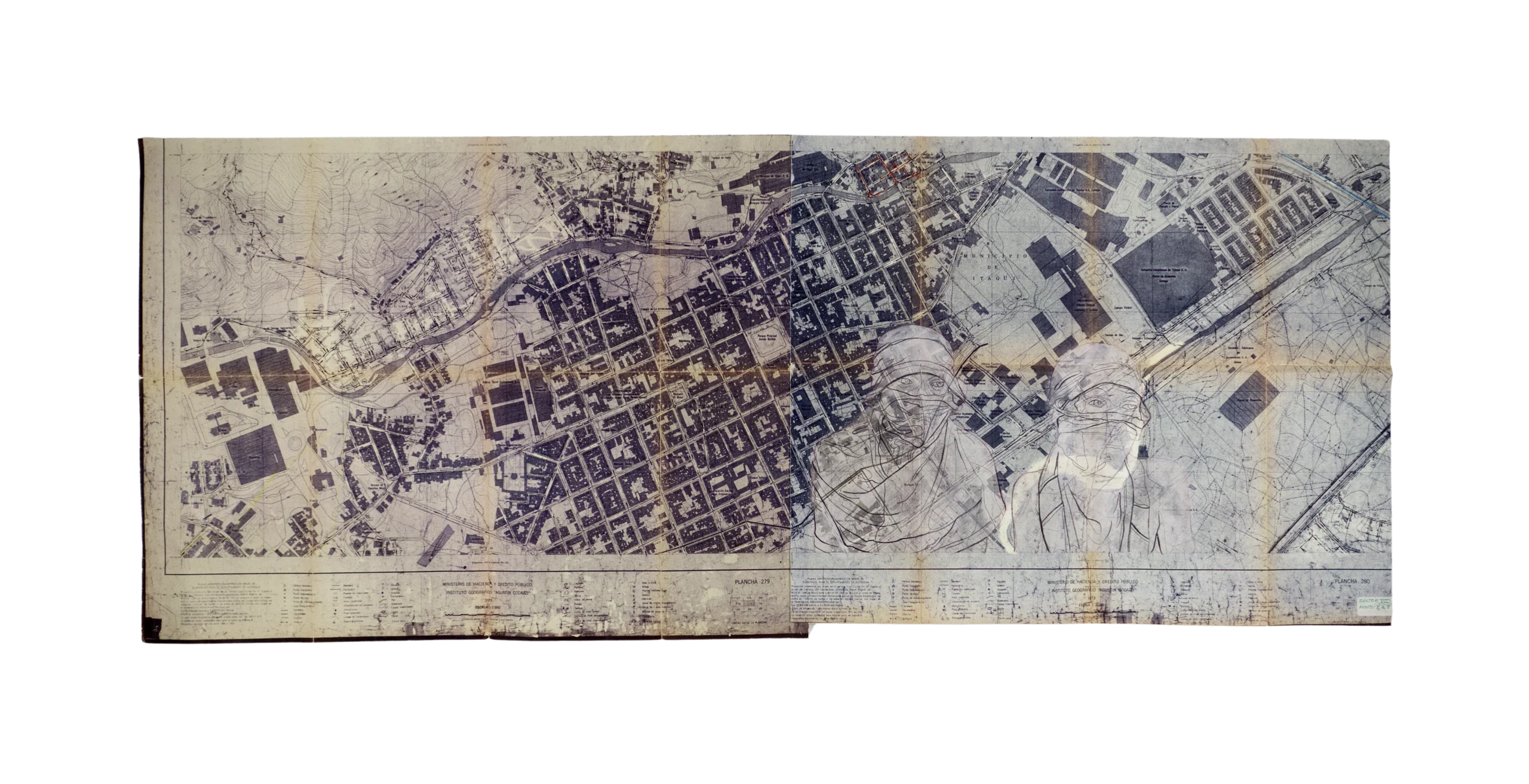
These maps, produced between 1971 and 1985 by the Agustín Codazzi Geographical Institute (IGAC), are more than mere geographical representations of Medellín. They are silent testaments to a time when the city – and the whole country – was shaken by violence, the forced recruitment of children and young people, and the horror of the explosions that defined everyday life.
Using charcoal, I have traced the plumes of smoke that rose after the bombs went off. Medellín lies in a valley, and from the mountains one could not only hear the echo of the explosions, signalling that something terrible had just happened, but also see the plumes of smoke indicating where the tragedy had occurred.
The silhouettes represent those who, instead of playing or dreaming, were dragged into the war; those who, on two wheels, were led straight onto a journey from which there was no return. This generation lies there in silence, having fallen into oblivion, for the stories of violence repeat themselves time and again.
Every line, every stroke, every shadow is a cry against oblivion. How can a society heal if it does not acknowledge its wounds? How can webuild a future if we do not confront the past? What can we do today to ensure that no child ever has to go through what they went through? How can we ensure that peace is not just a word, but a reality? Violence is not merely a closed chapter in the history books, but a wound that still bleeds in many
communities.
That period left indelible marks on Colombia’s collective memory, where violence became the norm and fear was part of everyday life. Even though the peace agreements and efforts towards reconciliation have made progress,
the legacy of those years lives on – in the scars of those who suffered, and in the challenges the country still faces in building a lasting peace.