
Topographies of Silence: The Corrosion of Memory
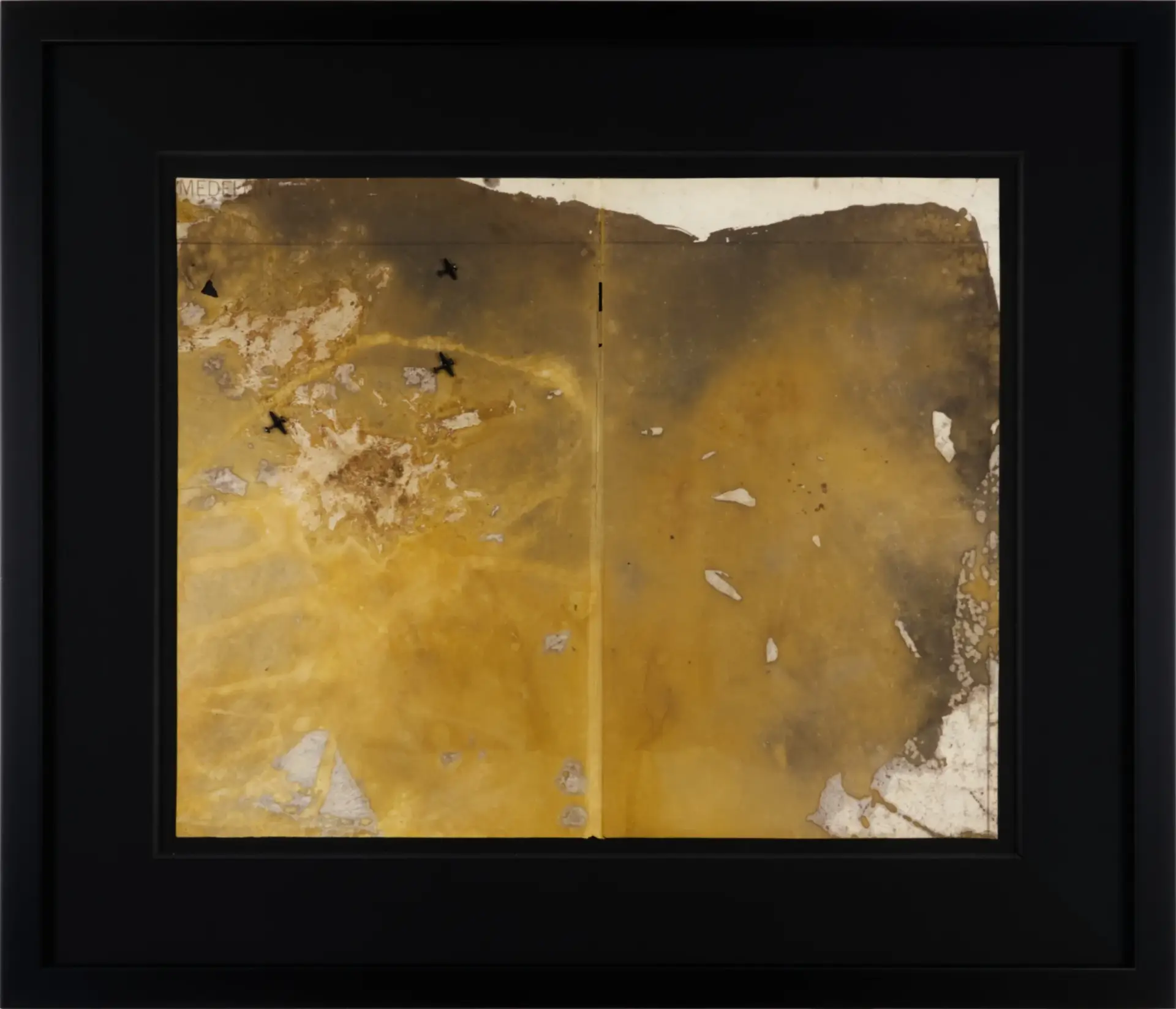
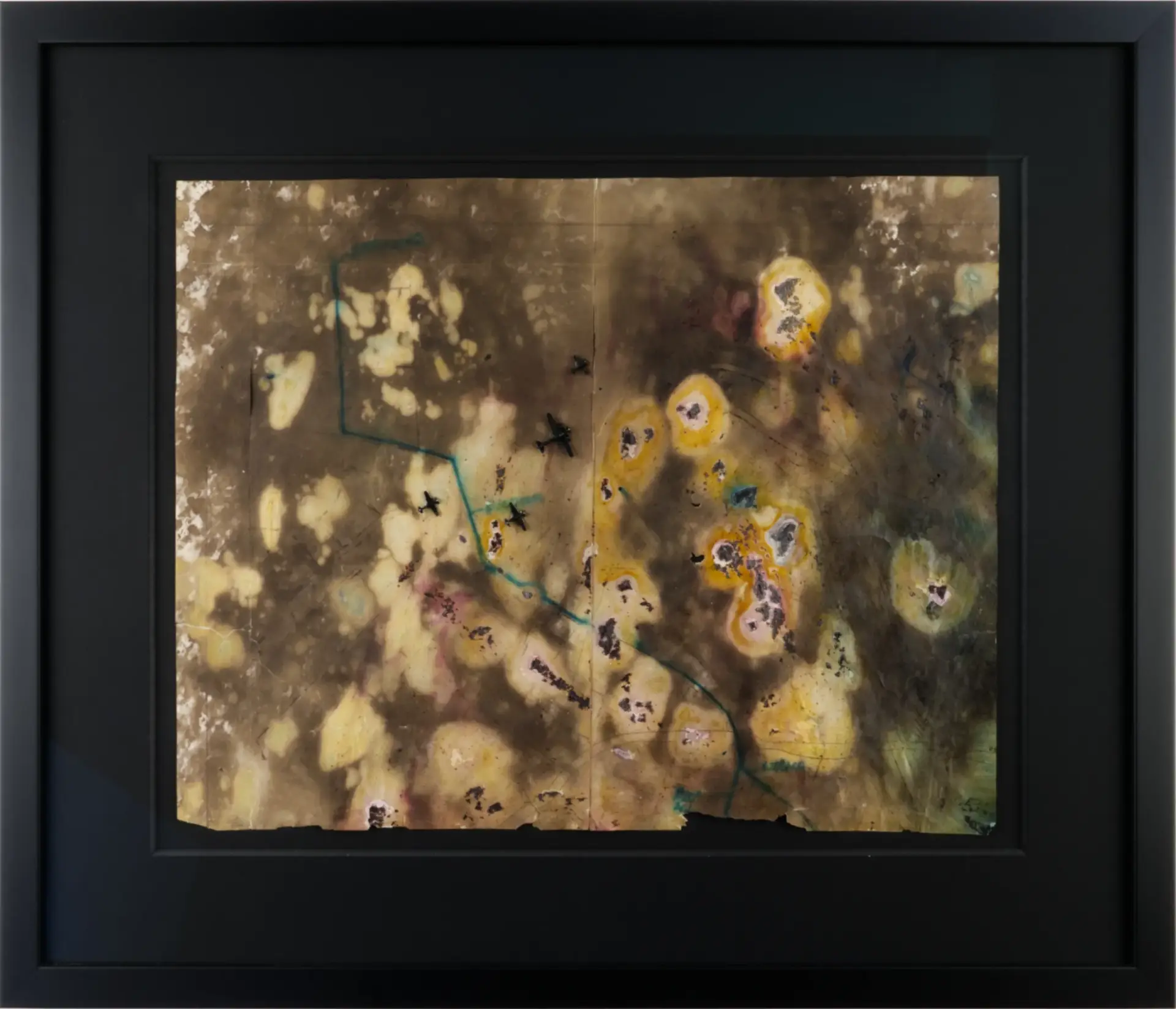
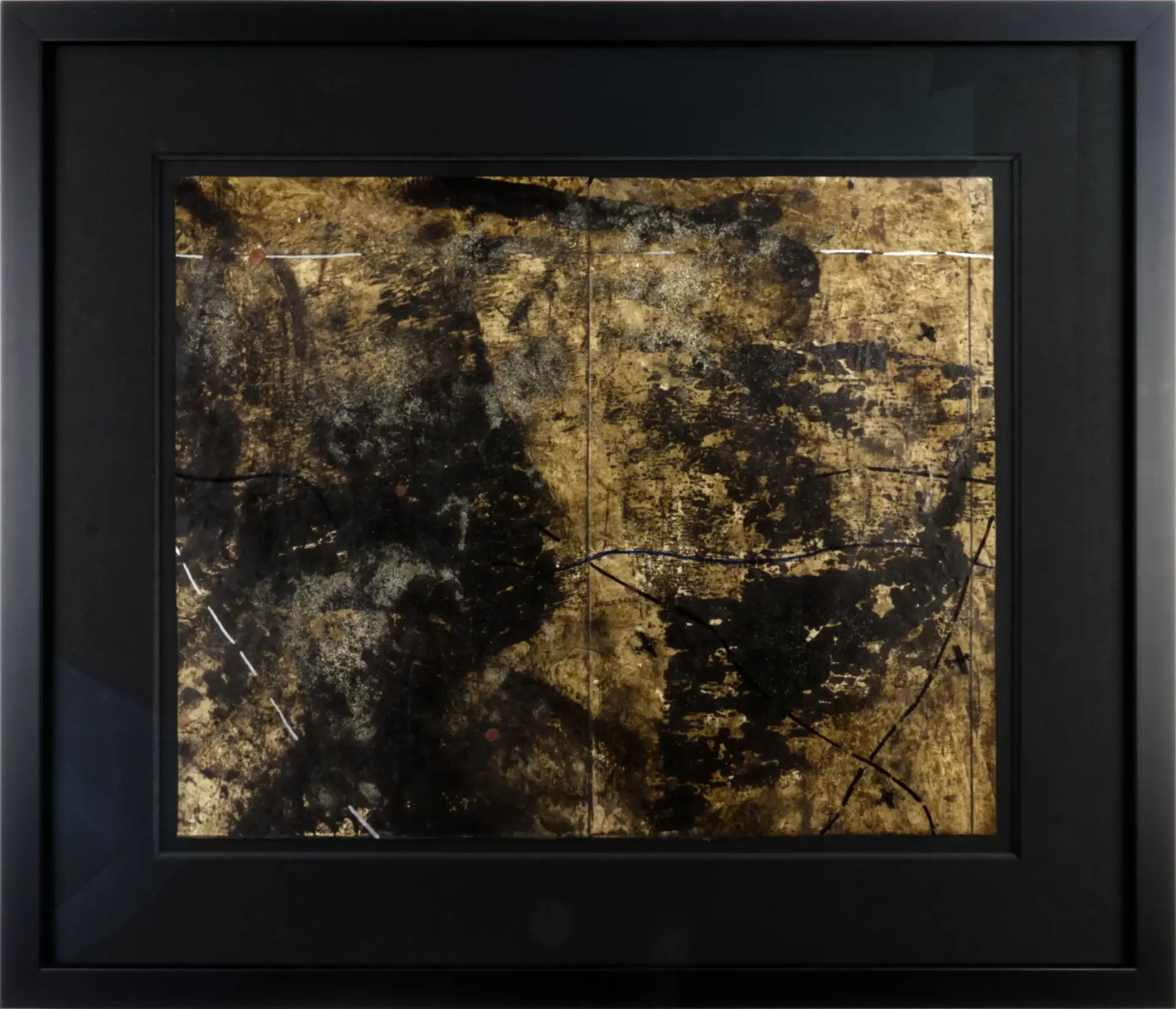
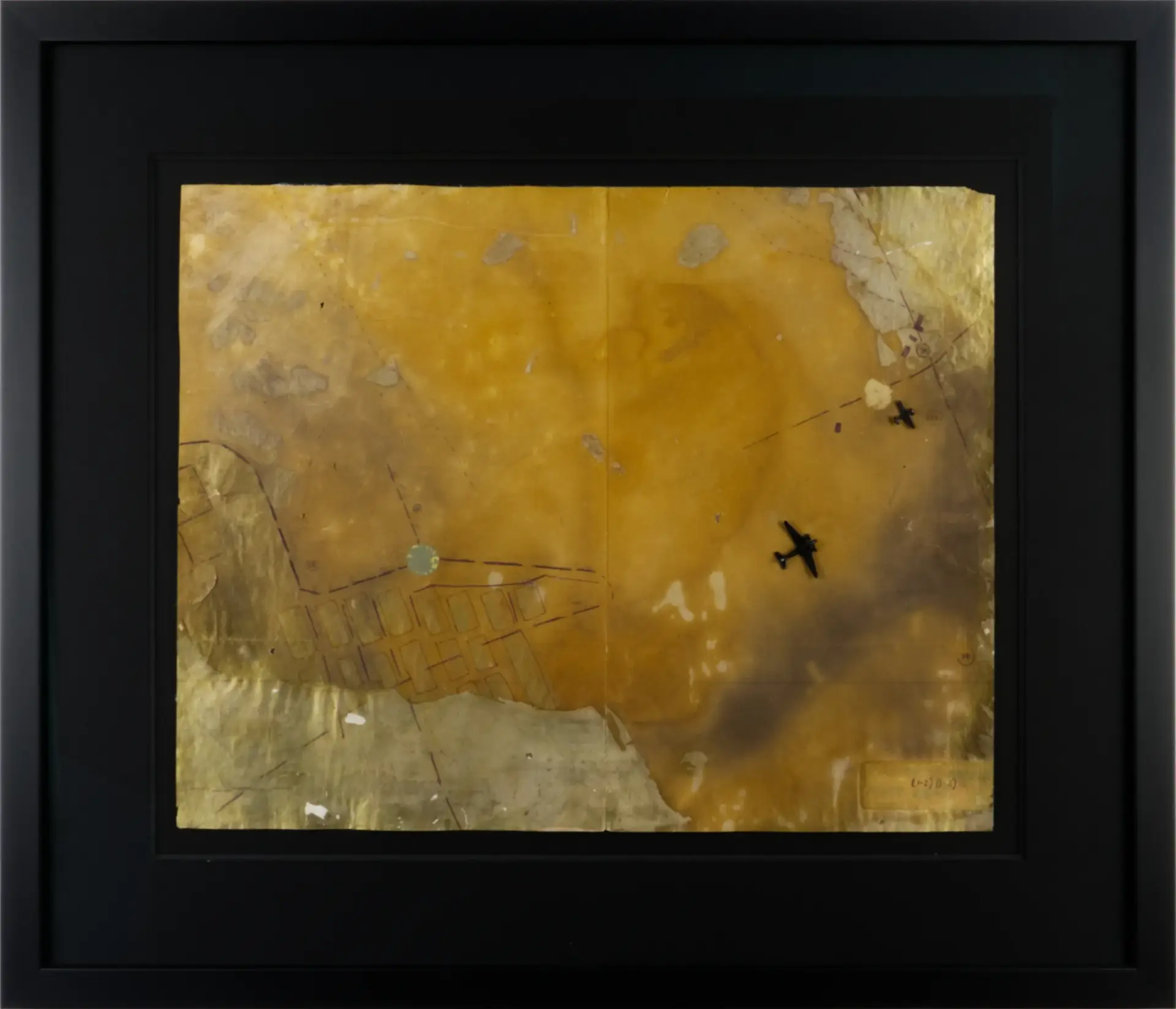
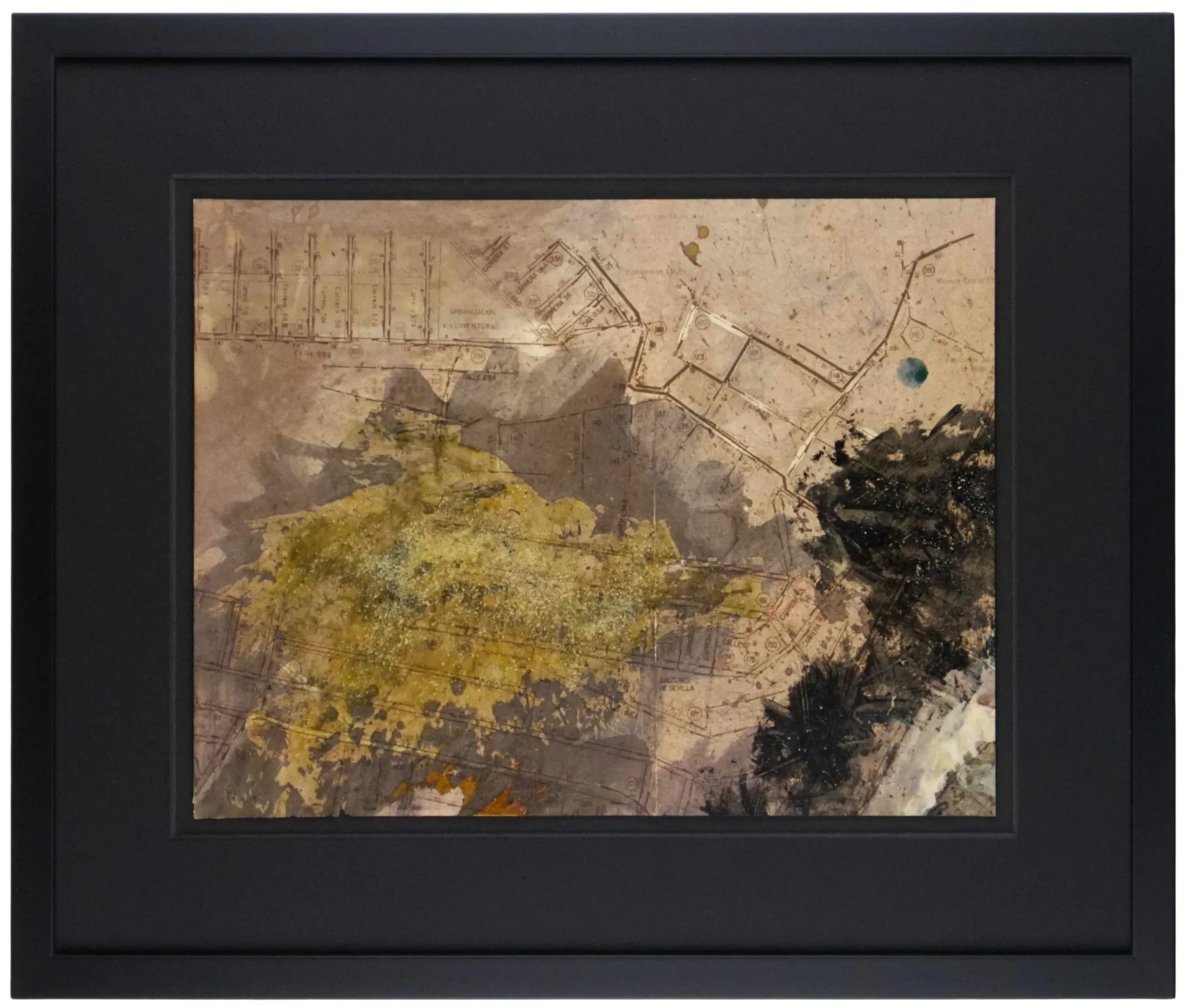
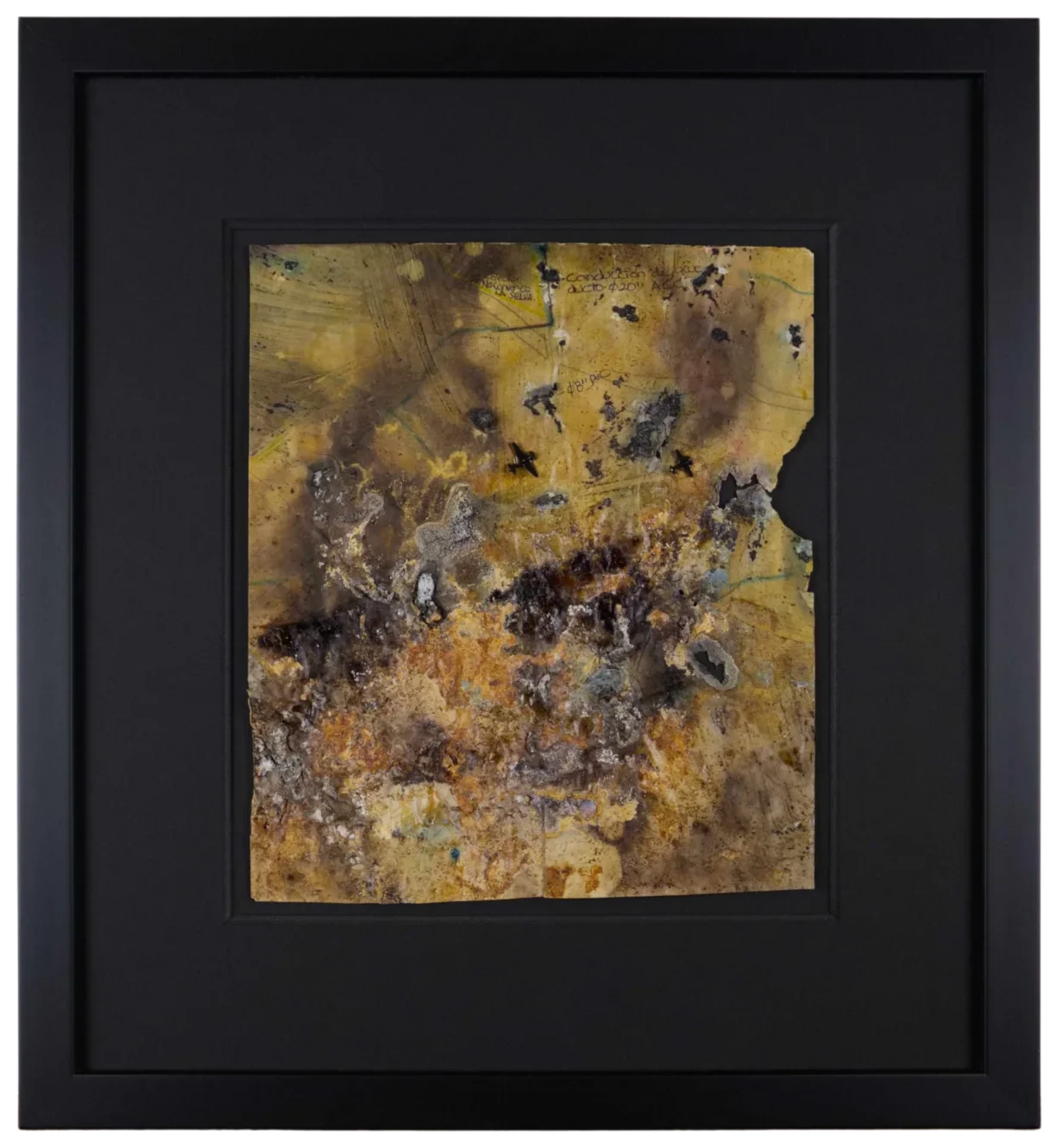
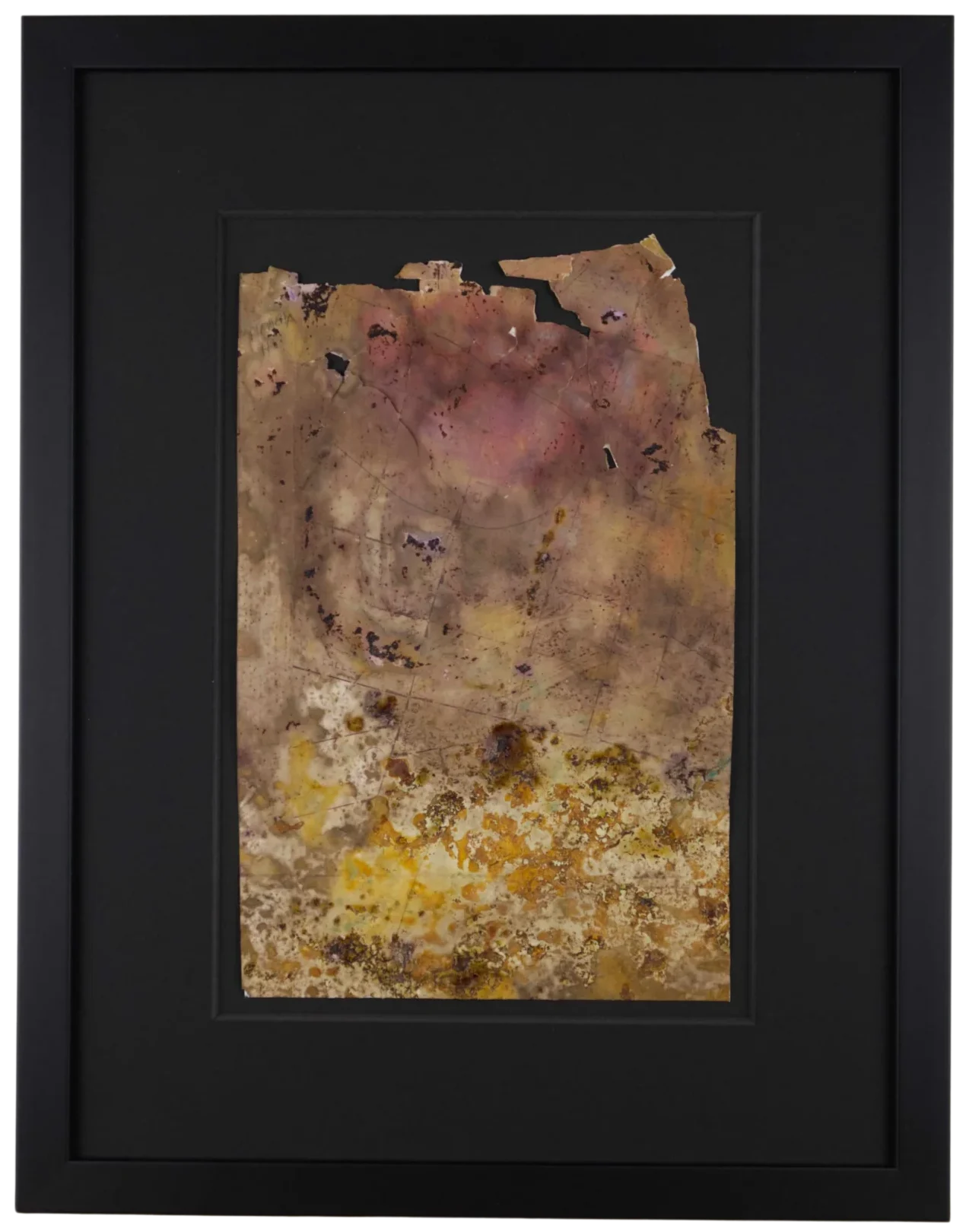
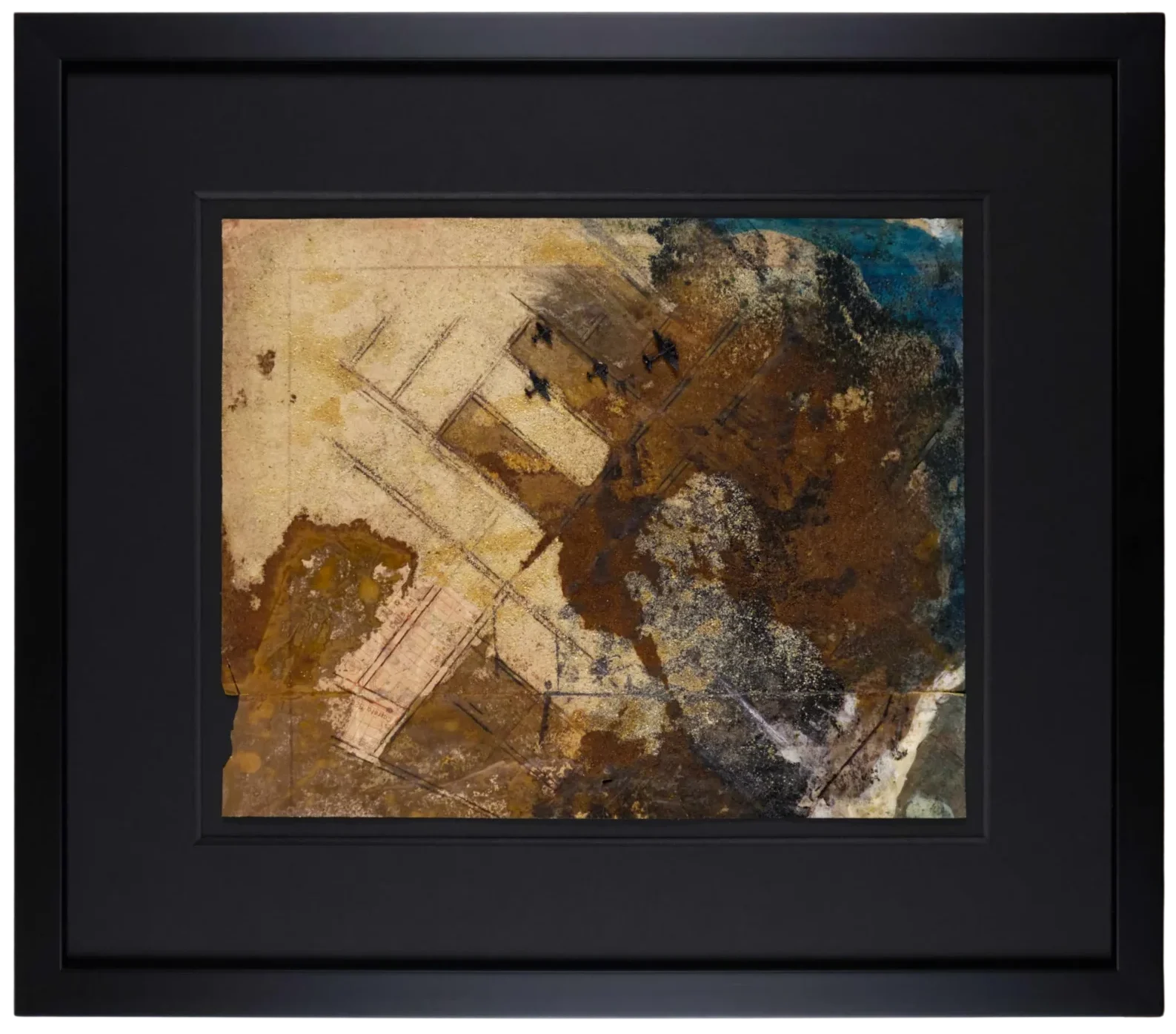
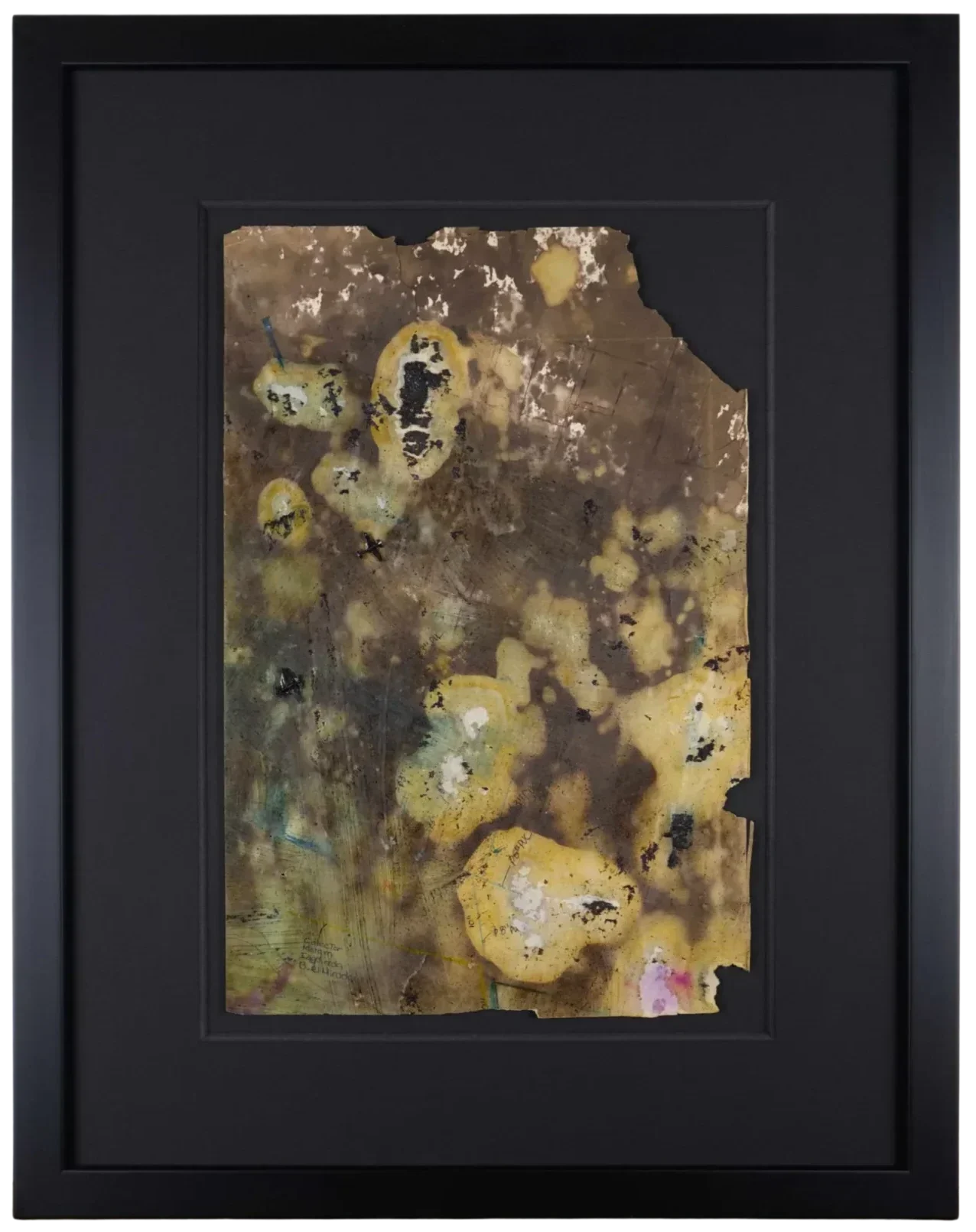
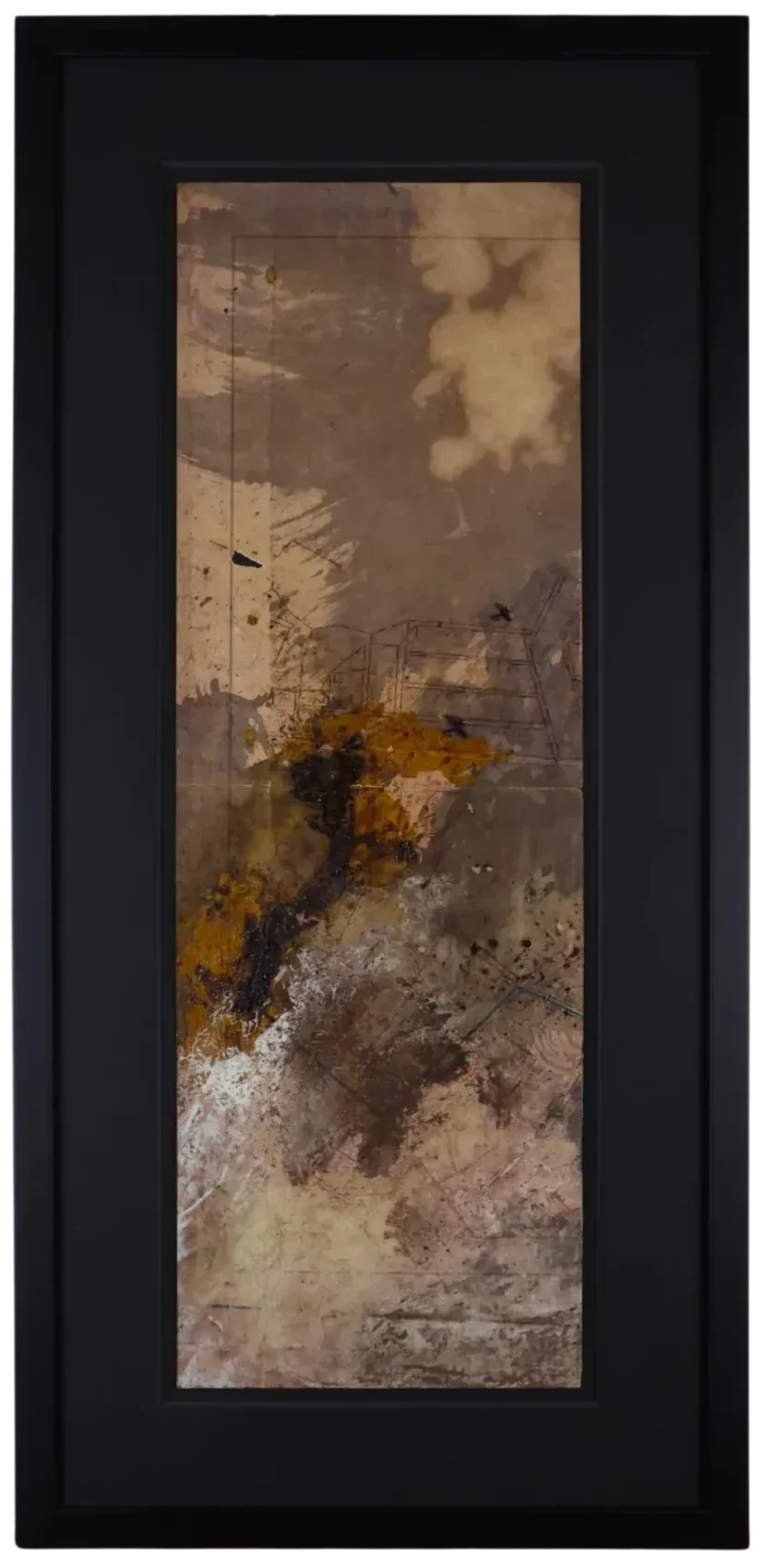
This series stems from an anti-monumental gesture: the intervention of urban maps of Medellín, printed between 1977 and 1990, using chemical residues from a former mirror factory. Here, the medium—the map as a symbol of order and power—is subjected to a process of material destabilisation, in which substances such as silver nitrate, stannous chloride and nitric acid, once accomplices in creating optical illusions, act as agents of deconstruction. These chemicals, which once gave shine to reflective surfaces, are transformed here into agents of corrosion and revelation. What does a mirror reflect when its very substance breaks down?
These maps transcend their cartographic function to become hybrid objects: halfway between a historical document, an abstract painting and a ready-made. The act of pouring the residues is not a mere technical process, but a rite of revelation, in which chance—the unpredictable reactions of the chemicals—and control—the choice of maps—engage in dialogue. Thus, the work oscillates between the autonomous and the relational: the viewer not only sees, but reconstructs meanings from the cracks.
The result is not clear images, but traces of a conflict: corrosion as a metaphor for territorial violence that represents itself and is inscribed in the fabric of cities and in the memory of their inhabitants. That violence, like a scar, finds in these maps a corrupted mirror in which to reflect itself: a surface which, rather than returning clear images, distorts memory and exposes the hidden layers of its history.
The reference to the mirror is no accident. In the tradition of contemporary art, the mirror has been a symbol of failed reflexivity. Here, the corroded mirror denies its original function: instead of reflecting, it distorts and reveals. It is a critique of the hegemonic representation of history, where Medellín—and its violence—is reflected in a surface that does not return a clear image, but rather an open wound. A traumatic archive which, rather than documenting, exposes the gaps in memory.
The chemicals, by reacting with the paper, not only degrade the physical medium but also metaphorically erode the official narratives, laying bare the tensions between urban development and the wounds it has ignored. This series, then, is not merely an aesthetic exercise, but an act of poetic resistance. Every stain, every crack in the map, is a chemical testimony to what the traditional mirror—that of history written by the victors—refuses to show. Is corrosion not, at its core, a form of truth?
The work does not seek permanence. As the maps degrade, they disappear as objects, yet persist as an experience and a question. This ties in with Claire Bishop’s aesthetics of the ephemeral, where contemporary art embraces loss as a political act. Corrosion, then, is a metaphor for resistance: what the system seeks to erase—territorial violence—emerges all the more powerfully through its own decomposition. These maps will continue to corrode, just like our memory: forgetting, repeating, resisting.