
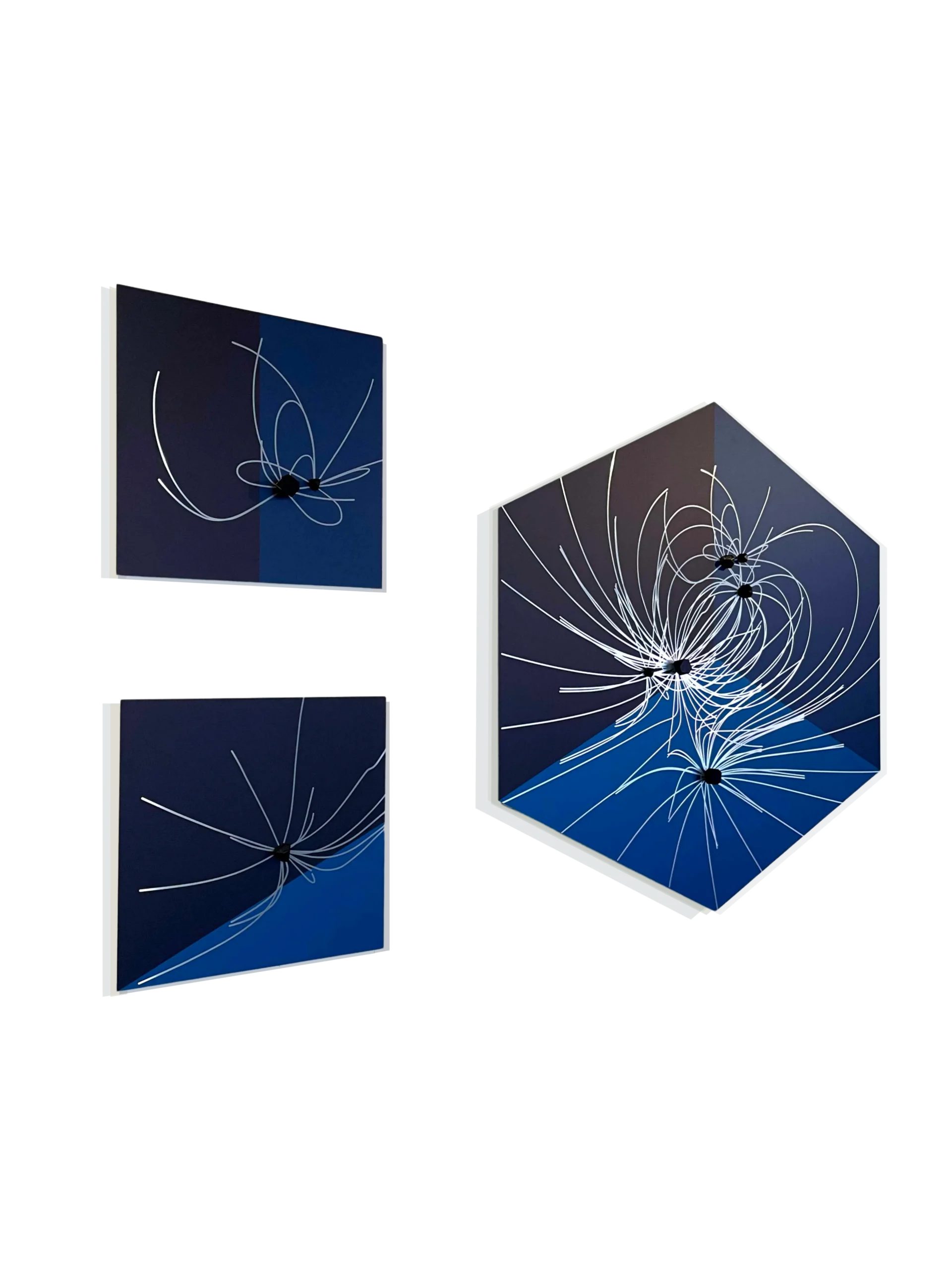
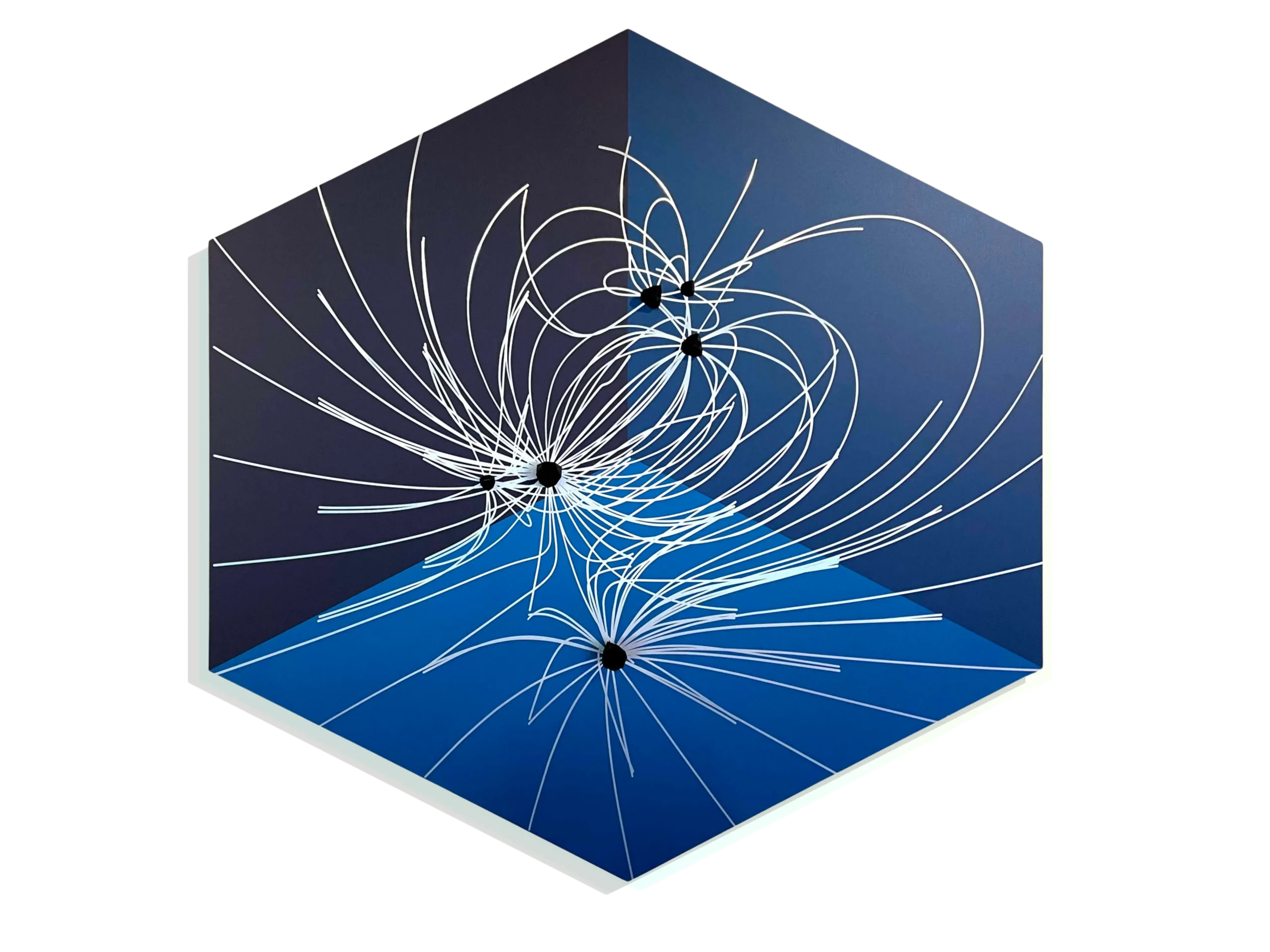
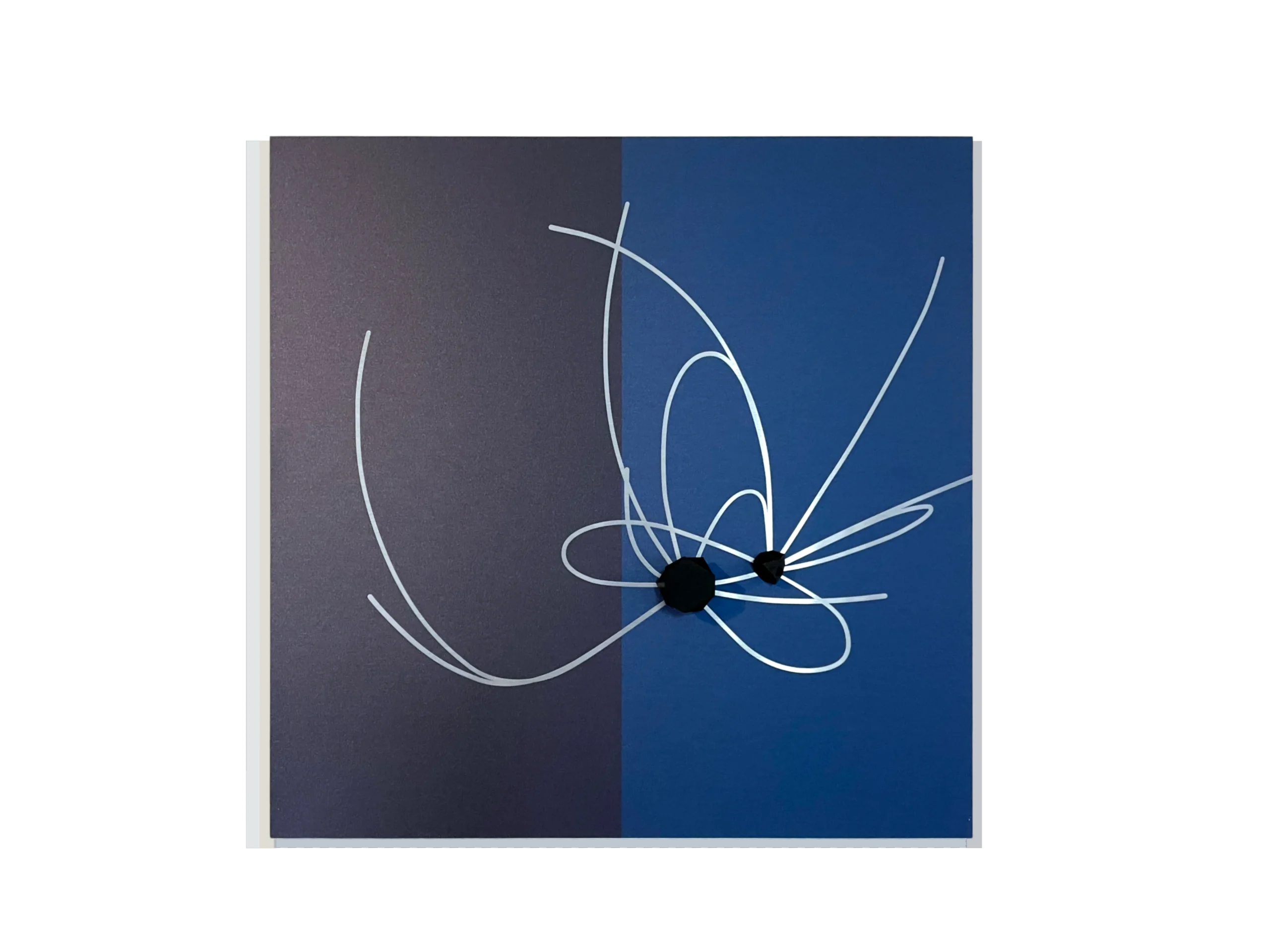
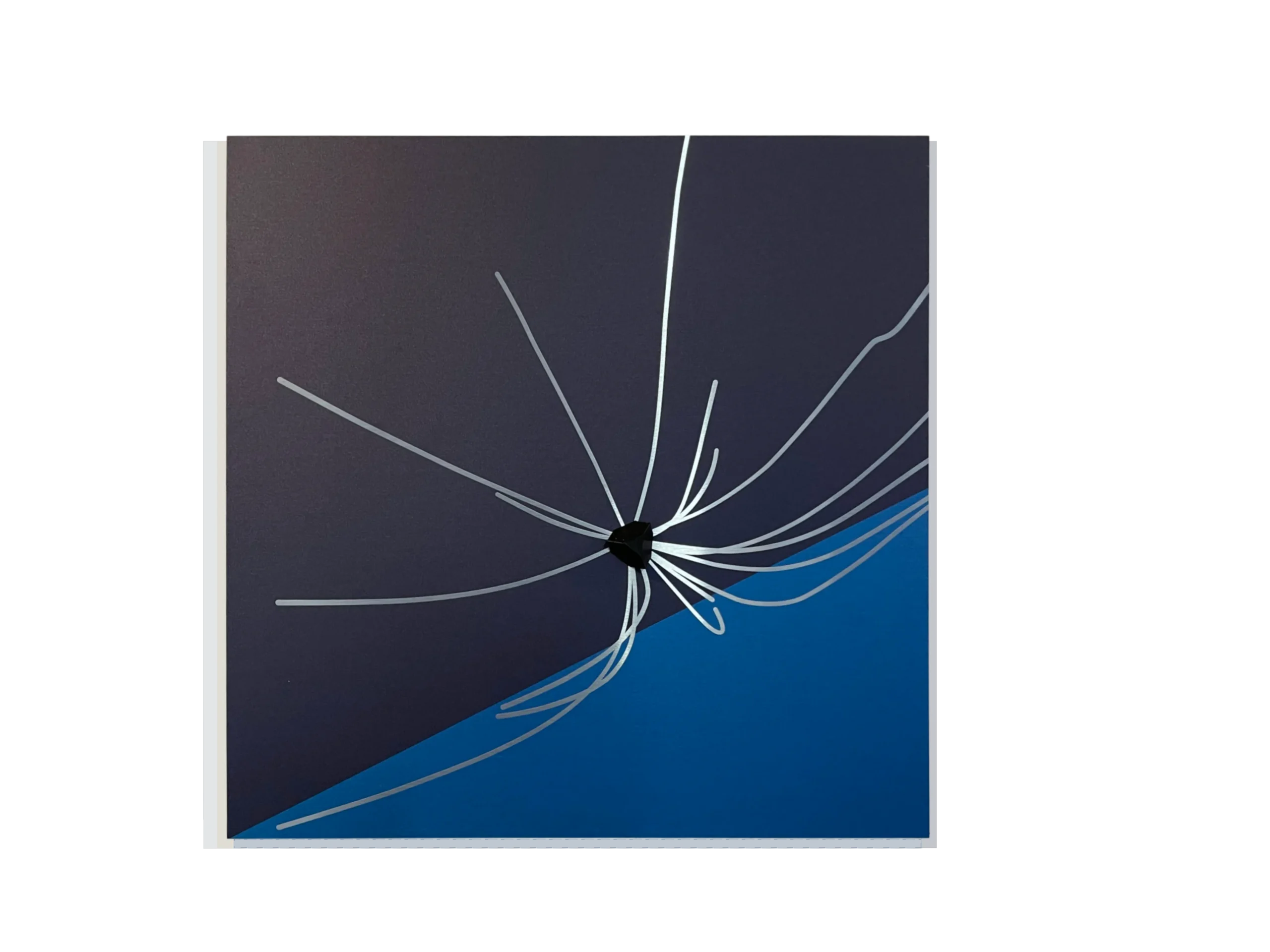
Formulas for simulation.
This series stems from a fascination with how an abstract construct — a mathematical formula — can be interpreted by simulation software, in real time, to generate a visual representation of the invisible. This process not only reveals a new paradigm of data visualisation to me, but also leads me to question how artistic creation can become a realm where algorithmic precision and the reinterpretation or rematerialisation of the abstract can intertwine.
The choice of electric fields as the subject for visual simulation is linked to the tensions generated in dynamic systems by the interaction of opposing poles or conflicting ways of perceiving the world. There is a widespread conviction that each point of view is the only valid and correct one. This reflects a world fraught with ideological, political, moral and ethical tensions that is driving us towards increasing polarisation, giving rise to systems that are increasingly intolerant, inflexible and radical.
The simulation of these dynamic systems takes place within a predetermined and standardised representational framework: isometry. This approach seeks a setting or camera obscura where the polyhedra—3D-printed and superimposed on the nodes or points where the dynamic lines meet—reinforce the idea of the immobile, the inflexible, that which does not flow and solidifies into regular geometric shapes.
This creative process delegates, in part, its development to algorithms or autonomous systems, just as in everyday life we relegate many of our decisions to algorithms. In my work, I aim for formulas—such as source code and the software that interprets it—to generate an accurate, aesthetic, refined and innocent reality, almost like a trap woven from silk threads with a rigorously calculated purpose.
Ultimately, this series seeks, in an ironic way, to highlight an everyday reality: how we fall into the trap of social media, where we encounter a standardised and highly aestheticised model of life. Through these platforms, we allow our ways of thinking, our political self, our social self, and our capacity for self-determination—to be different, to think differently, to live in and for diversity—to be manipulated by optical illusions. The aim is to build a space for understanding and tolerance; that is to say, a space for coexistence and peace.